High Performance Battery Materials
Cathodes, Anodes, and Solid Electrolyte Materials

NEI Products › Battery Materials › Cathode & Anode Tapes › for Li-ion Batteries › Silicon
Anode Electrode Sheets for Lithium-ion Batteries
Silicon (Si) is widely used in high-energy lithium-ion batteries because its theoretical capacity (~) far exceeds that of standard graphite. However, silicon significantly expands and contracts during use, which can lead to mechanical failure.
To address this, NEI offers composite anode sheets with 10% and 20% silicon mixed into a graphite matrix. The graphite acts as a structural support to help manage volume changes, while an integrated network of Multi-Walled Carbon Nanotubes (MWCNTs) and a specialized binder system help maintain electrical contact between particles. These composite sheets provide a practical way to increase energy density over pure graphite while utilizing a matrix designed to improve overall structural integrity during cycling.
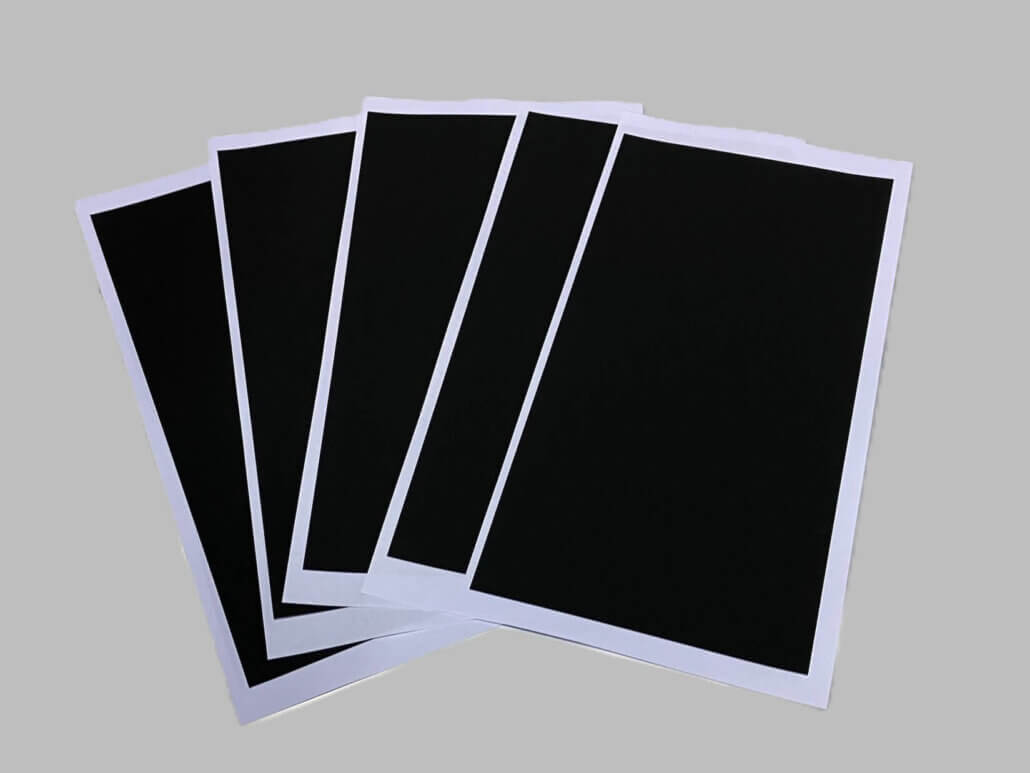
NEI manufactures two variations of silicon-graphite composite electrodes: NANOMYTE® BE-100E with 10% Silicon and NANOMYTE® BE-150E with 20% Silicon.
Standard electrode sheets are 5 inches x 10 inches (127 mm x 254 mm) and cast either single-sided or double-sided on 10 µm thick copper foil current collectors. NEI also offers customization options, such as different active material loadings, electrode composition, binder type, current collector, and more.
Select a tab below to learn more about each material, including links to our technical and safety data and ordering information.
Our 10% Silicon-Graphite anode electrode sheets are composed of 10% Silicon, 77.5% Graphite, 7% SBR-PAA-CMC binder, and 5.5% MWCNT-Carbon Black mixture cast on a copper foil current collector. They are available in ready-to-use packages of 2, 5, 10, 25, 50, and 100 sheets (or more).
 Product Specifications:
This product is a solid, multi-layered article and defined as an “Article” under the OSHA Hazard Communication Standard (29 CFR 1910.1200) and the REACH Regulation (EC) No. 1907/2006.
Hazardous ingredients, including Silicon, MWCNTs, and Carbon Black, are fully encapsulated within a dried polymer matrix of PAA, CMC, and SBR. In this manufactured state, the ingredients are not respirable, nor do they exhibit flammable properties. The product does not meet the criteria for classification as a hazardous substance under GHS/OSHA/REACH. Hazards listed for individual components apply only to the release of dust or fumes through mechanical grinding, high-heat thermal decomposition, or chemical dissolution.
In its manufactured and shipped form, it does not pose a physical hazard or health risk to humans or the environment.
Precautions for Safe Handling
Appropriate personal protective equipment should be used at all times. Avoid contact with eyes and skin. Handle in a well-ventilated area. Avoid creasing and folding, or actions that abrade, sand, or grind the coated surface, as this can cause the brittle Silicon-Graphite coating to delaminate or flake off, creating unnecessary dust. Do not eat or drink in the area where sheets are handled. Wash hands after handling to ensure no conductive carbon particles remain on the skin.
Conditions for Safe Storage
Silicon and PAA binders are hygroscopic. Store sheets flat and in a dry and well-ventilated place, away from heat —ideally a desiccator or a dry box. Exposure to humidity can cause the PAA binder to swell or the silicon to surface-oxidize, degrading electrochemical performance.
For complete information on the safe use of this material, please refer to the Safety Data Sheet:
Page updated March 12, 2026