
Home › Products › Battery Materials › Aqueous Battery Materials
Cathode & Anode Materials for Aqueous Batteries
Aqueous electrolyte-based rechargeable batteries are of interest as an alternative to organic-solvent based secondary batteries. Two primary reasons include the batteries being inherently non-combustible and potentially lower cost. In addition, the ionic conductivity of the electrolyte is high, which enables rapid charge and discharge. Recent innovations are aimed at expanding the electrochemical stability window of aqueous systems, and increasing the energy density and cycle life. More broadly, electrochemical systems using aqueous systems are the subject of R&D in such diverse fields as desalination, lithium extraction, and separation technologies.
NANOMYTE® Electrode Sheets for Aqueous Batteries
NEI offers ready-to-use cathode and anode electrodes, deposited on conducting carbon paper current collector (205 μm thick). Here is a brief overview of our standard aqueous electrode sheets:
- Sheet Dimensions: 5 inches x 10 inches (127 mm x 254 mm)
- Coating: Single and double-sided options available; coated edge-to-edge (unless specified otherwise).
- Processing: Electrode sheets are calendered and vacuum-dried prior to packaging.
- Quantities: Each material is available in increments of 2, 5, 10, 25, 50, and 100 sheets.
- Customization Options: The active material loading and electrode composition can be customized, based on specific needs.
Quick Links
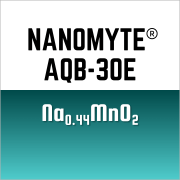 Engineered for high-performance aqueous sodium-ion batteries, these Na0.44MnO2 electrode sheets provide an eco-friendly, cost-effective, and safe solution for grid energy storage. Their unique tunnel structure ensures excellent structural stability and fast sodium-ion diffusion for dependable, long-cycle operation.
Alpha-Manganese Dioxide
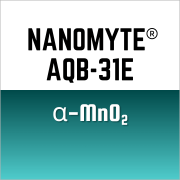 Alpha-Manganese Dioxide (α-MnO2) is a high-performance electrode material engineered for next-generation aqueous batteries. Its unique 2×2 tunnel structure provides open atomic pathways for rapid ion transport, enabling high specific capacity, fast kinetics, and excellent cycling stability. Ideal for advanced zinc-ion, sodium-ion, and supercapacitor research.
Iron Phosphate
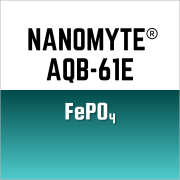 Utilizing a stable heterosite crystal structure, Iron Phosphate (FePO4) resists lattice strain during cycling while enabling rapid ion diffusion through its Fe–O–P framework. Cast on conductive carbon paper, these electrodes are ready to assemble and offer a dimensionally stable, high-rate platform to accelerate your aqueous energy storage research.
Olivine Sodium Iron Phosphate
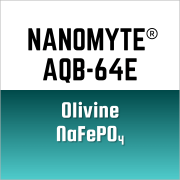 Engineered specifically to thrive in water-based chemistries, our Olivine NaFePO4 offers exceptional phase stability and resistance to aqueous degradation. This emerging material provides a highly secure, non-flammable framework, making it the ideal choice for researchers and developers pioneering ultra-safe, eco-friendly stationary energy storage systems.
Sodium Vanadium Phosphate
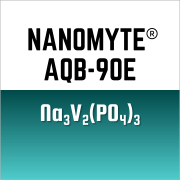 Designed for high-voltage aqueous sodium-ion batteries, these Sodium Vanadium Phosphate (Na3V2(PO4)3) electrode sheets deliver exceptional power density and a robust lifespan. Their rigid NASICON framework enables rapid ion transport, making them an ideal choice for high-rate, demanding energy storage applications.
Carbon-coated Sodium Titanium Phosphate
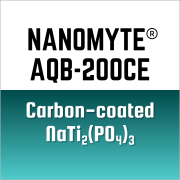 Boost high-rate performance and cycle life with our Carbon-coated Sodium Titanium Phosphate NaTi2(PO4)3 electrode sheets. Optimized for aqueous sodium-ion batteries, this NASICON-structured anode material is cast on carbon paper and features a uniform carbon matrix to maximize electronic conductivity and ensure structural stability.
Updated September 18, 2026