NEI Corporation
  • About
    • About NEI
    • Frequently Asked Questions
    • Careers
  • Products
    • Battery Materials
      • Li-ion Battery Powders
      • Li-ion Battery Electrodes
      • Na-ion Battery Powders
      • Na-ion Battery Electrodes
      • Solid Electrolyte Materials
    • Functional Coatings
    • Electrospun Mats / Membranes
    • Materials for New Energy
    • Heat Transfer Fluids
  • Testing
    • Cell-Level Battery Testing
    • Powder Characterization
    • Coatings Characterization
    • Dispersions Characterization
    • Battery Characterization
    • Corrosion Testing
  • Services
    • Battery R&D Services
    • Materials R&D Services
    • SEM Imaging Services
    • Materials Analysis
    • Subcontracting Services
    • Electrospinning Services
    • Expert Witness Services
    • Technology Commercialization
  • Technical & Media
    • Brochures
    • Material Safety Data Sheets
    • Battery Specification Sheets
    • Coating Technical Data Sheets
    • Electrospinning Spec Sheets
    • White Papers & Case Studies
    • Videos
  • News
  • Contact
  • Click to open the search input field Click to open the search input field Search
  • Menu Menu
General News, White Papers

Case Studies in Designing New Nanoscale Materials

Core-Shell Particles
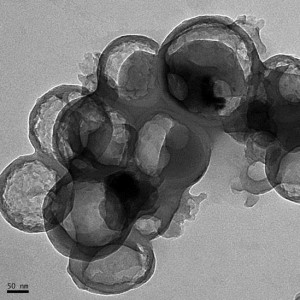
Core-shell

Example of core-shell nanoparticles produced at NEI Corporation

Core-Shell nanoparticles are composite particles where a core material is coated with a material of a different composition (shell), imparting unique functionalities that are otherwise unattainable for the individual materials. Such nanostructured particles have diverse applications. NEI Corporation has recently developed a patent pending, scalable process to produce core-shell nanoparticles. The process can be used to manufacture metallic and ceramic core-shell nanoparticles, such as metal / metal oxide and metal / metal boride core-shell nanoparticles. The versatility of the process allows core-shell nanoparticles to be synthesized in a wide range of compositions.

Applications:

  • Biomedical – in-vitro and deep tissue imaging
  • Solid propellants – launch vehicles, satellites, and missiles
  • Energetic materials – airbags, drug injection, and micro-valves
  • LEDs, lasers, and phosphors
  • Catalysis


Sulfide Nanomaterials

Lithium Tin Phosphorus Sulfide (LSPS) »

Lithium Tin Phosphorus Sulfide (LSPS) is a “superionic” solid that conducts lithium ions at room temperature. The patent pending solid electrolyte is designed to eliminate flammability issues associated with currently used liquid electrolytes, while providing high ion conductivity. At room temperature, the electrolyte has high lithium-ion conductivity (~10-3 S/cm) and can potentially be used in lithium-ion and lithium-sulfur rechargeable batteries. The processing methodology, which has been scaled to the kilogram level, can be adapted to other multi-element sulfide compositions.

Processes to produce tin (IV) sulfide (SnS2) nanoparticles (~100 nm), and micro-nano hybrid zinc sulfide (ZnS) particles, have also been developed at NEI.


Oxide Nanomaterials

Magnesium Oxide (MgO)

Magnesium oxide is commonly used as a grain growth inhibitor, desiccant, cement additive and an industrial cable insulator. Additional applications include visible and IR transparent windows, deacidification of at-risk paper items, protective coatings in plasma displays, and medicinal applications. We produce high surface area (specific surface area 10-15 m2/g, primary particle size ~150 nm) magnesium oxide nanoparticles.

We also produce and supply nanoparticles of yttrium oxide (cubic Y2O3), yttrium aluminum oxide (garnet, Y3Al3O12), and magnesium aluminum oxide (spinel MgAl2O4).


High Surface Area Hollow Silica Fibers
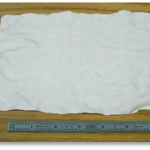
HSF_Fig1 HSF_Fig2

NANOMYTE® SuperSurf-C and SuperSurf-W are exceptionally high surface area, fibrous silica-based materials. Their nominal specific surface area (BET) is > 1000 m2/g. These materials are supplied in two forms: woven cloth (SuperSurf-C) and wool (SuperSurf-W). The fibers of these materials are hollow, which allows them to be infiltrated with other materials to achieve a desired functionality. The exceptionally high surface area of the fibers is due to the presence of nanoscale roughness and pores.

Applications:

  • Base for filters to remove hazardous materials from water & air
  • Antimicrobial textiles
  • Thermal insulators
  • Desiccants and sorbents


Download White Paper (pdf) »


About NEI Corporation

Founded in 1997, NEI Corporation develops, manufactures, and sells nanoscale materials for a broad range of industrial customers around the world. NEI’s products incorporate proprietary nanotechnology and advanced materials science to create significant performance improvements in manufactured goods. NEI’s products include advanced protective coatings, high performance battery electrode materials, and specialty nanoscale materials for diverse applications. NEI has created a strong foundation in the emerging field of nanotechnology that has enabled the company to become a world leader in selected markets.

Contact Us »

August 14, 2014
https://neicorporation.com/wp-content/uploads/Color-Taggants-VIS.jpg 600 750 Krista https://neicorporation.com/wp-content/uploads/logo-nei.png Krista2014-08-14 12:00:192017-09-29 16:38:25Case Studies in Designing New Nanoscale Materials

Categories

  • Battery Article
  • Battery News
  • Case Studies
  • Coating News
  • Functional Coatings
  • General News
  • New Products
  • Patents
  • Press Release
  • Product Updates
  • Services
  • White Papers

Archives

  • April 2025
  • March 2025
  • December 2024
  • October 2024
  • September 2024
  • August 2024
  • July 2024
  • June 2024
  • June 2023
  • January 2023
  • July 2022
  • January 2022
  • November 2021
  • June 2021
  • March 2021
  • October 2020
  • September 2020
  • August 2020
  • June 2020
  • May 2020
  • March 2020
  • January 2020
  • October 2019
  • July 2019
  • June 2019
  • September 2018
  • May 2018
  • March 2018
  • June 2017
  • April 2017
  • February 2017
  • January 2017
  • October 2016
  • April 2016
  • March 2016
  • February 2016
  • December 2015
  • November 2015
  • October 2015
  • September 2015
  • June 2015
  • May 2015
  • April 2015
  • March 2015
  • January 2015
  • December 2014
  • November 2014
  • October 2014
  • September 2014
  • August 2014
  • May 2014
  • March 2014
  • October 2013
  • August 2013
  • May 2013
  • October 2012
  • July 2012
  • April 2012
  • February 2012

Products

  • Battery Materials
  • Protective Coatings
  • Heat Transfer Fluids

Services

  • Materials R&D
  • Battery R&D, Cell Assembly, & Testing
  • Characterization & Analysis
  • Machine Learning
  • Electrospinning
  • Expert Witness Services
  • Technology Commercialization

Technical Info

  • Material Safety Data Sheets
  • Battery Specification Sheets
  • Coating Technical Data Sheets
  • Electrospinning Spec Sheets
  • White Papers
  • Brochures
  • Videos

Language

© 1997 - 2026 (NEI Corporation) - Enfold WordPress Theme by Kriesi
  • Link to X
  • Link to Facebook
  • Link to LinkedIn
  • Link to Youtube
  • Terms
  • Privacy
  • Sitemap
Scroll to top Scroll to top Scroll to top

In order to give you the best experience, NEI uses cookies to analyze traffic to this website. If you continue to use this website without changing your cookie settings, you are consenting to the use of cookies by NEI.


Your privacy is important to us. For more information on what information is collected and how we use our cookies, please visit our privacy policy page.

Powered by  GDPR Cookie Compliance
Privacy Overview

This website uses cookies so that we can provide you with the best user experience possible. Cookie information is stored in your browser and performs functions such as recognising you when you return to our website and helping our team to understand which sections of the website you find most interesting and useful.

Strictly Necessary Cookies

Strictly Necessary Cookie should be enabled at all times so that we can save your preferences for cookie settings.